
The class ends and disappears with the call.
The student learned five new words and neither of you remembers which ones. No recording to review, no list to study, no record of what was corrected. Next week, you repeat them.
Nothing holds your student. Not even a prepaid package: whoever wants to stop, stops. And all they take from months of classes are memories, because each one ended along with the Google Meet call. No recording to review, no saved vocabulary, no progress on screen, no concrete reason to book the next one.
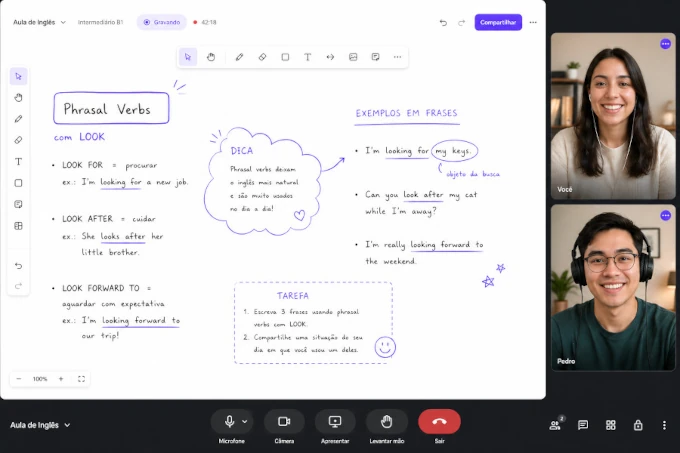 live · 47:12
It is not a teaching problem. It is that your class leaves no trace. And what leaves no trace, the student has no way to value.
The student learned five new words and neither of you remembers which ones. No recording to review, no list to study, no record of what was corrected. Next week, you repeat them.
When it is time to decide whether to continue, the student has no chart, no saved vocabulary and no recorded class to look at and conclude they improved. They have the memory of the last WhatsApp message. And memory loses to a discount.
They do not complain. They just disappear, or ask to take a break. Google Meet, Zoom and WhatsApp is what every language teacher uses, so when they compare you to the cheaper school, the only field that differs is the price.
This is not a market average, it is yours. Put in your numbers and see what the class that leaves no trace took out of your last twelve months.
Math: hourly rate x hours per week x 4 weeks x 12 months x students who left.
And the number repeats every year the student cannot see their own progress.
I want to stop losing this 10 free live class hours · no card requiredEach of these tools is fine on its own. Together, they're six logins, six bills and zero memory of your student. One system fixes that without you losing control of anything.
And a spreadsheet you pray doesn't corrupt, holding the month's accounting together.
All on yourname.noladi.app. The student joins in 1 click, sees your brand, leaves with recording and report on the dashboard.
Collaborative whiteboard, Canva slides inside the class, imported PDFs, video and screen sharing. The student isn't watching passively: they draw with you, mark answers, write on top of the material you brought.
You draw, write, build an exercise; the student writes with you on the same screen. No 'send me the board link', no separate app.
Import your Canva design's link and the slide becomes part of the whiteboard. No tab switching, no fuzzy screen share, no 'can you see this?' every minute.
Drag the class PDF onto the whiteboard and the student marks, draws and answers on top. The exercise happens inside the room, not somewhere else.
The basics done right, on the browser, nothing to install. Works on the student's phone, tablet and laptop.
Right after class ends, the student opens their space and finds: the recorded video with synced subtitles, the full transcript identifying who said each turn, stats about their own speech and AI corrections with explanations. That's how they review the class.
Wednesday, April 30, 7:00 PM (8 min)
So today we're going to talk about your last weekend. What did you do?
I goed to the beach with my family. The water was very cold.
Nice! Just a quick correction: it's "I went", not "I goed".
Ah claro, eu sempre esqueço esse.
I went to the beach. I want to go again next weekend.
The past of "to go" is irregular. "Goed" doesn't exist; the correct form is "went".
"Freezing" conveys very cold water better than "very cold". It sounds more natural to a native speaker.
Clear, well-built definition — a complete and natural sentence.
Great use of "smoothly" and "without too many pauses". Precise vocabulary.
Download it for free and take the live room, the lesson review and the audio with you. Available for iPhone and Android.
Free to download. Teacher and student use the same app.
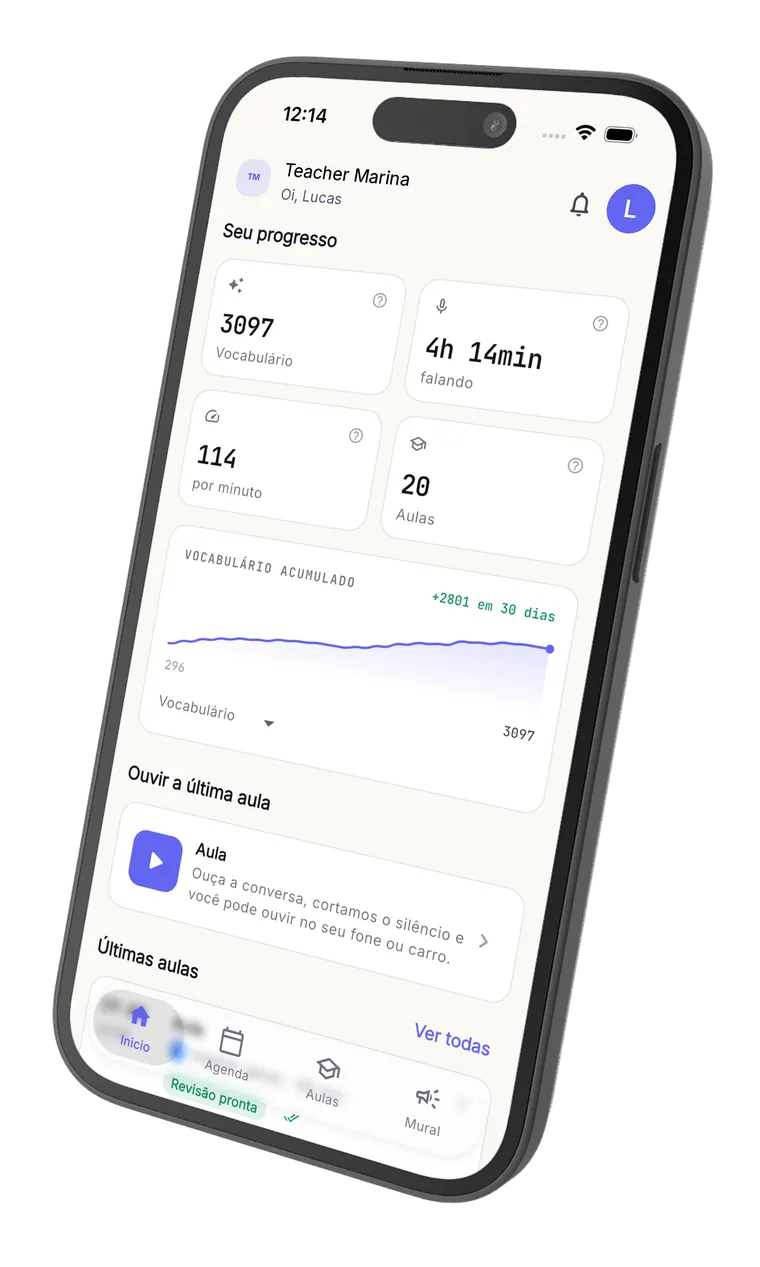
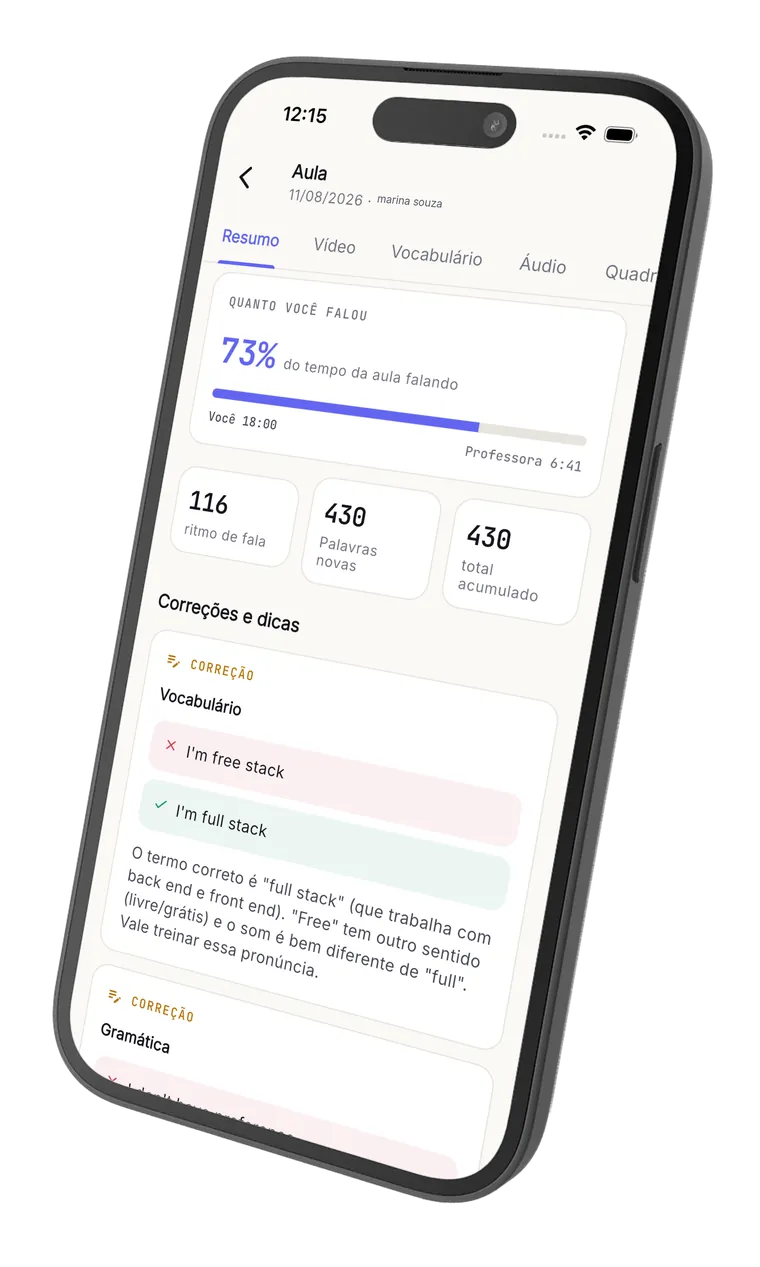
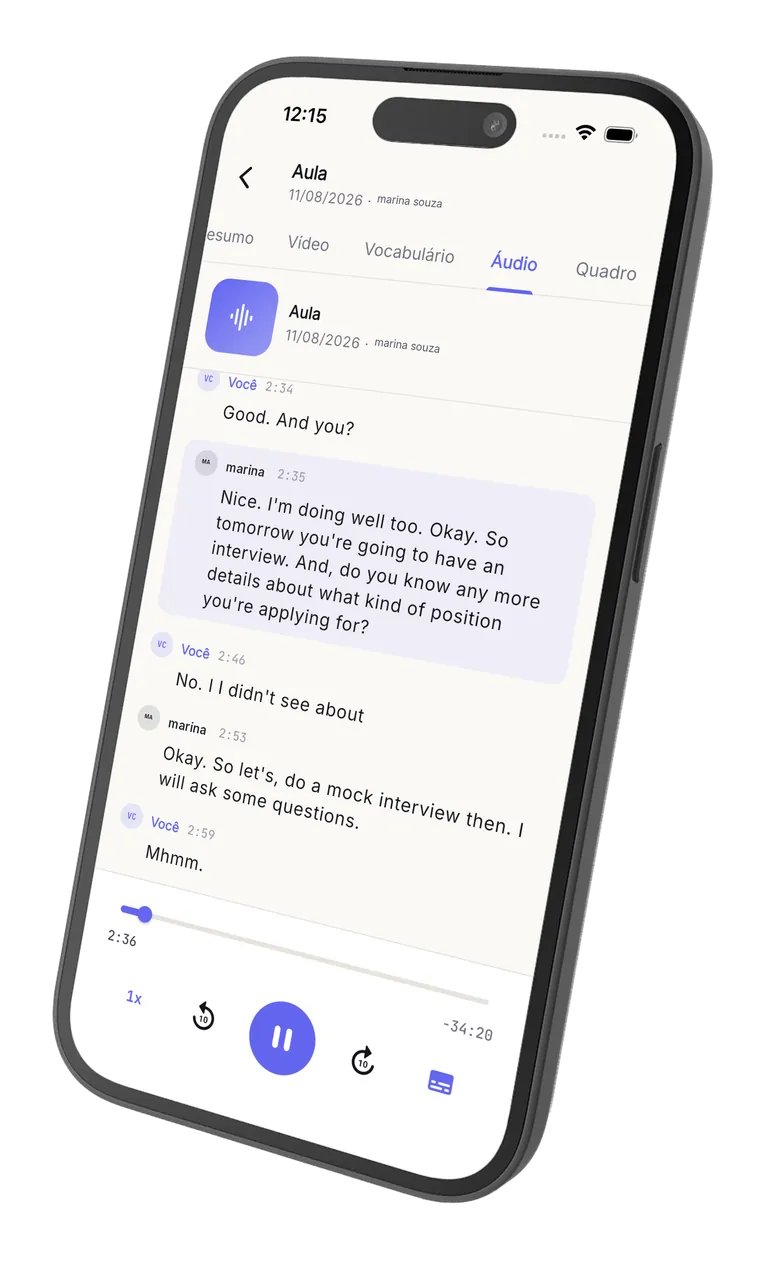
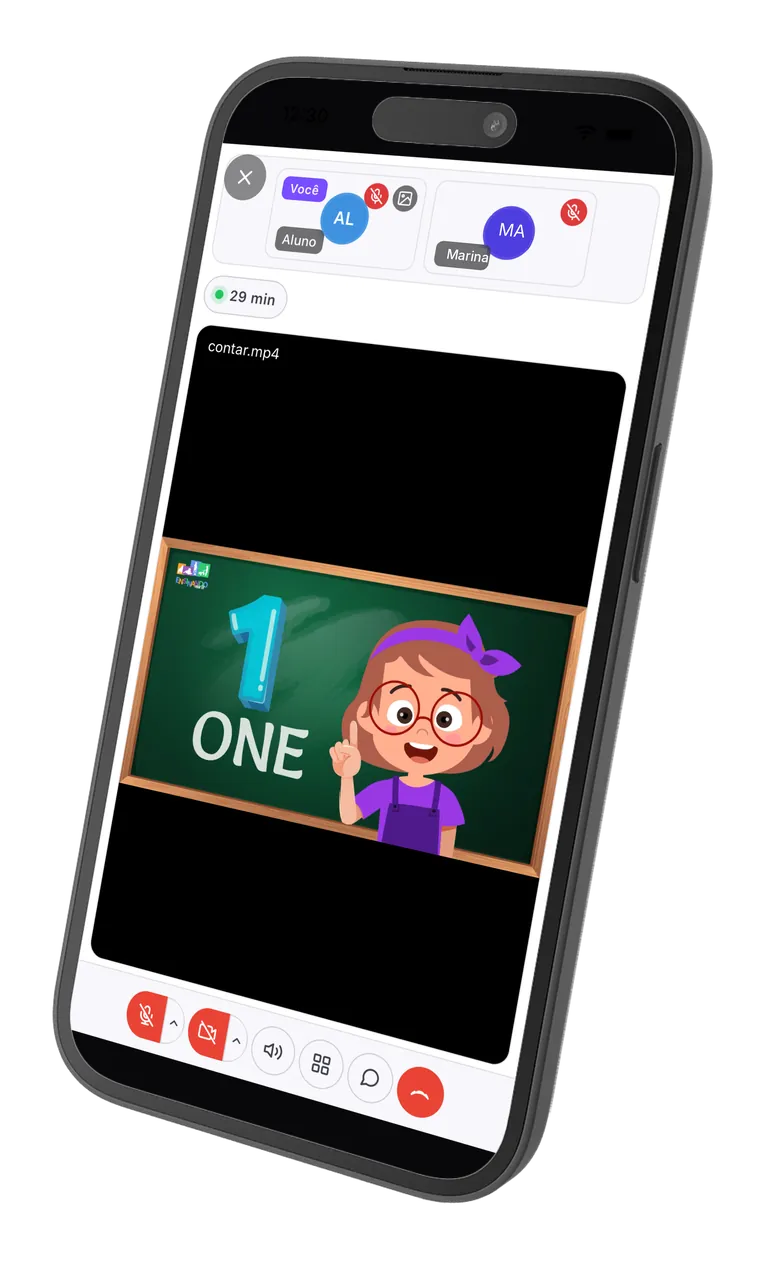

A practical and complete tool for online teachers. My students and I really like the review feature, and having a mobile version makes it easier for my students to open the content and the recordings more often.
A quick walkthrough of the real screens: the class happens in the Noladi room and, when it ends, the student gets the recording, the transcript, the stats and the AI corrections.
Each of your students gets their own student area, with your brand, where they see the schedule and the full history of every class they've had with you. Every class becomes material on their dashboard: recording, transcript, vocabulary and a progress chart over time. All on the browser, nothing to install.
Because inside your Noladi room the student isn't passive. The collaborative whiteboard lets them draw with you, mark answers on an exercise, write on top of the PDF or the Canva slide you imported. Google Meet and Zoom are videoconferencing; Noladi is an online classroom. And when class ends, they still have recording, transcript, vocabulary and progress, with your brand.
The AI only points to concrete moments in the student's speech, with context and explanation, never grades or judges performance. The student reads it as pedagogical suggestion, not as assessment. You see everything that lands on their dashboard and can add your reading in the next class.
The recording stays private on the dashboard: you access it with your login, the student accesses with theirs. No one else sees it. You tell them before the first class that the session is recorded precisely so they can use the recording to study. A serious student likes having the record.
No. We aren't competing with Preply, Cambly, iTalki, Babbel Live or Lingoda; those are marketplaces, and there you are part of a catalog. Keep using them as usual, with the students who reach you through those platforms. Noladi is for a different kind of student: your VIP, the one who is already yours, who pays you directly and who today has no place to call a classroom. By the way, we don't really have competitors; we're the first platform to think about the teacher's classroom treating them as the owner.
The name came from a phonetic transliteration of 'knowledge'. The most faithful Portuguese spelling of the English sound would be something like 'nóli-dji', but I used to pronounce it 'nóladji' (with an 'a' in the middle). I dropped the 'g' and the accent, and 'Noladi' was born. In practice, three readings circulate: 'no-la-DI' (what the formal Portuguese rule prescribes for words ending in -i), 'no-LA-di' (the most common natural read) and 'Nóladi' (the original name). Any of the three is welcome.
Create the account, set up your brand, add your first students. Your first 10 live class hours unlock right away, and the 30-day clock starts today. No card. No commitment.
